Origin
Kanchipuram sarees belong to the South Indian weaving tradition associated with Kanchipuram in Tamil Nadu — the same tradition many people refer to as Kanjeevaram. Banarasi sarees come from the North Indian tradition around Varanasi (Banaras).
Weave and motifs
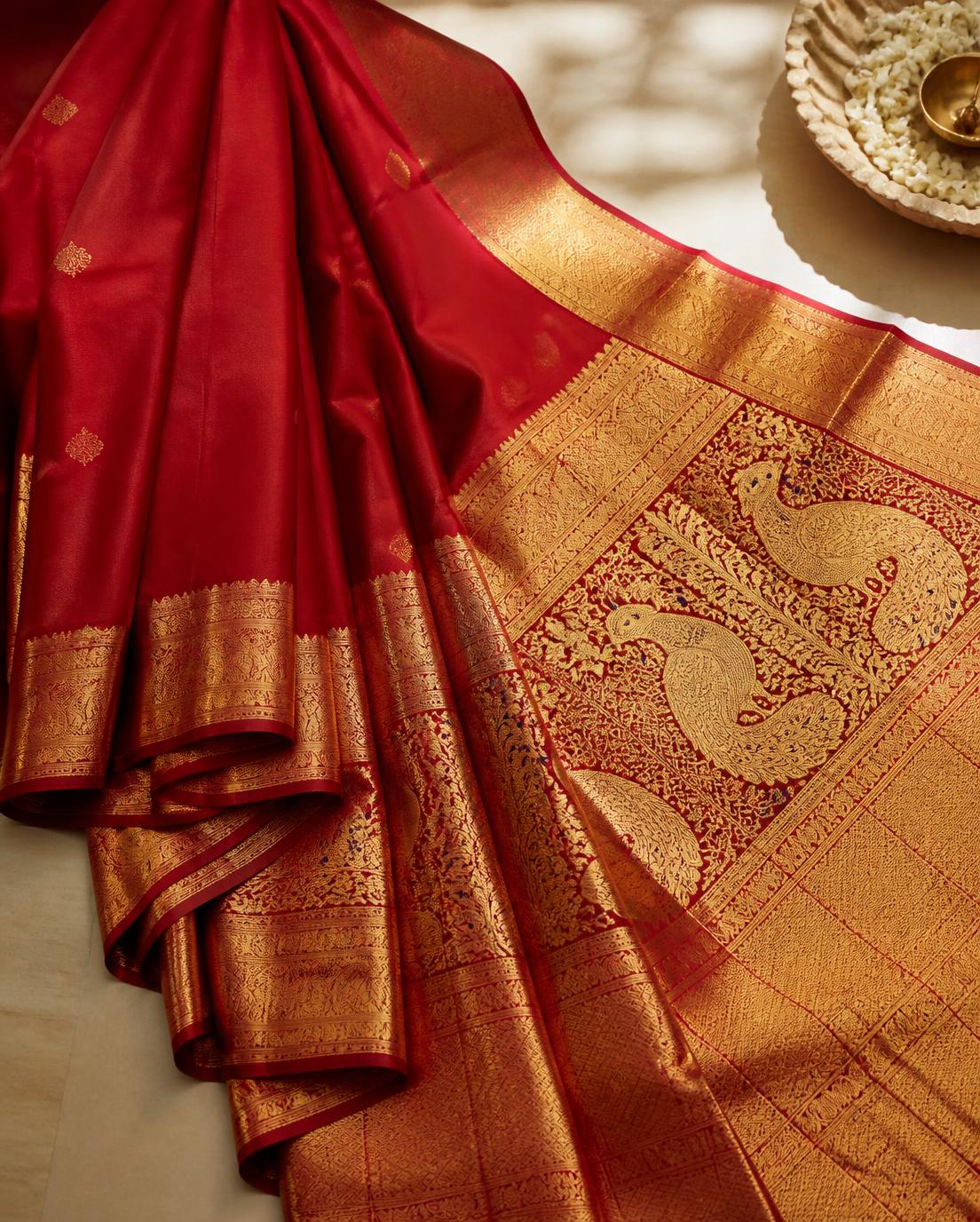
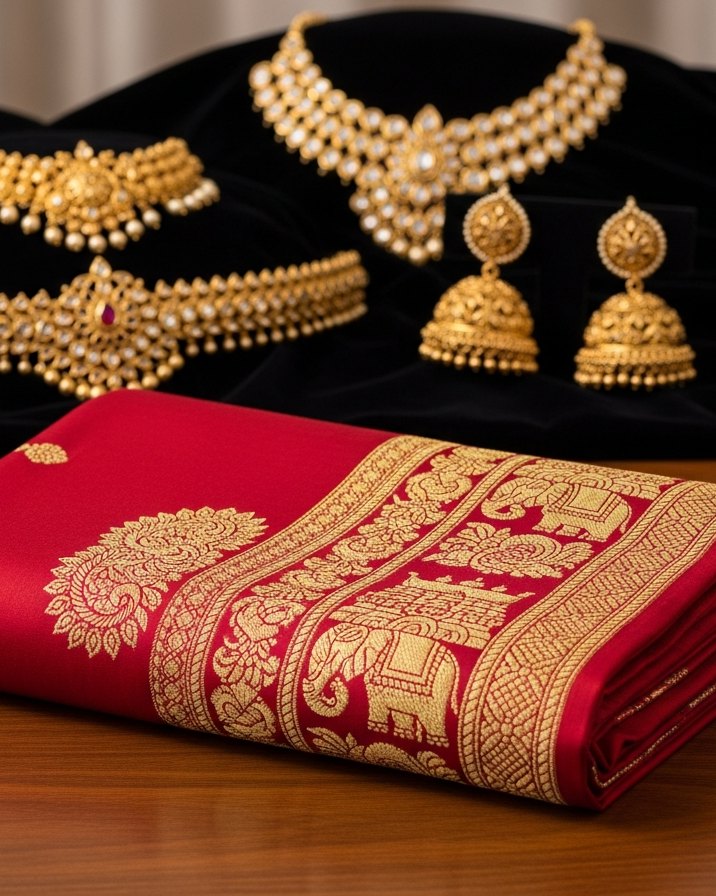
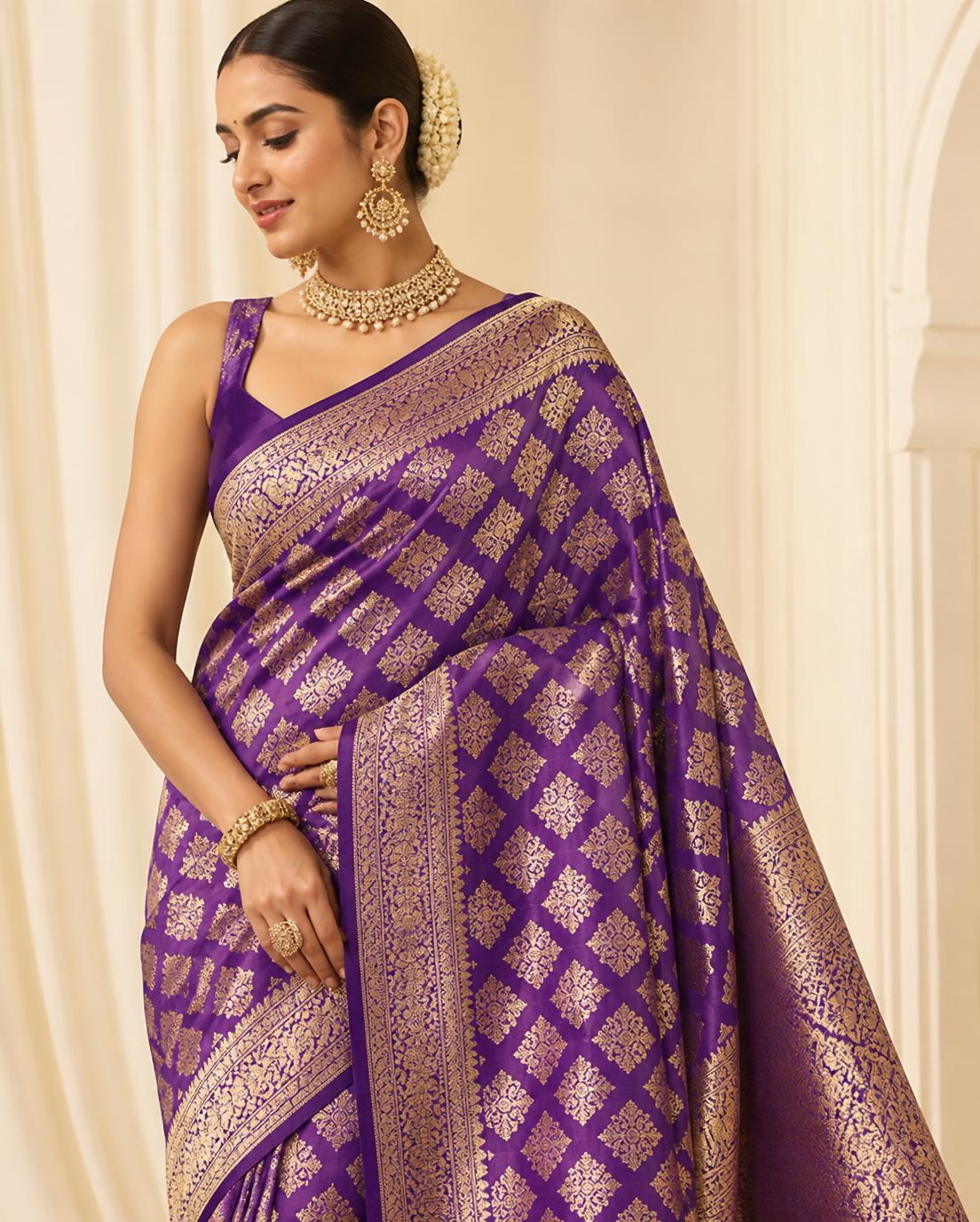
The Kanchipuram saree is built around a distinct contrast border and pallu, typically with temple, peacock, mango or check motifs in gold zari. The Banarasi saree is known for brocade work — jaal patterning and small floral butis woven across the body, with ornate rather than architectural borders.
Feel and drape
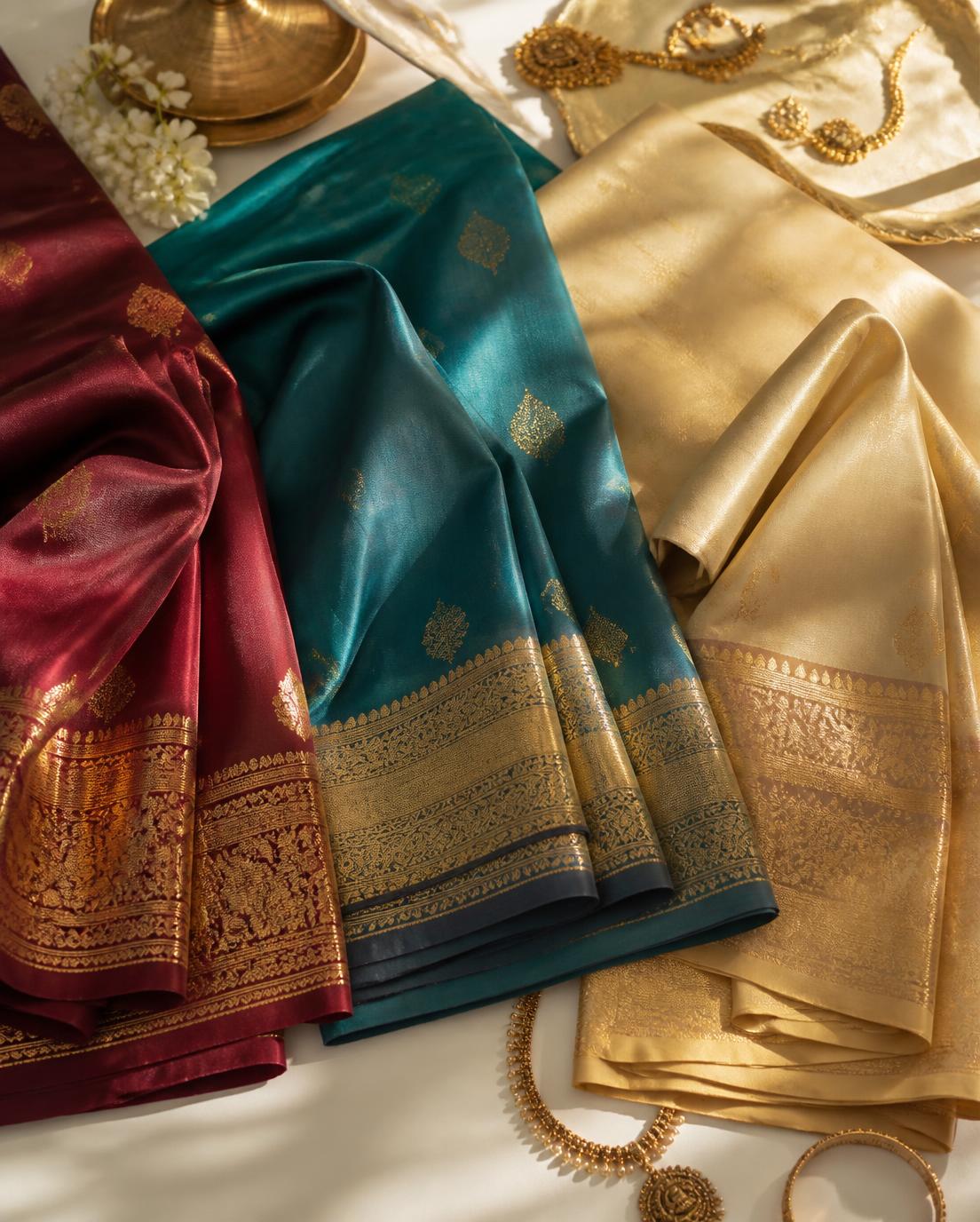
As a rule of thumb, Kanchipuram silks feel firmer and heavier and hold their pleats sharply. Banarasi silks often drape softer and lighter, which many customers prefer for evening functions where they will be on their feet for hours.
Which occasion suits which
In Bengaluru households, the Kanchipuram silk is most often the ceremony saree, while the Banarasi is chosen for receptions, sangeets and festive evenings. Neither rule is fixed — plenty of brides wear a Banarasi for the wedding itself.
The most reliable way to decide is to see both opened on the same counter. We keep them together at Byadarahalli for that reason.
Related collections