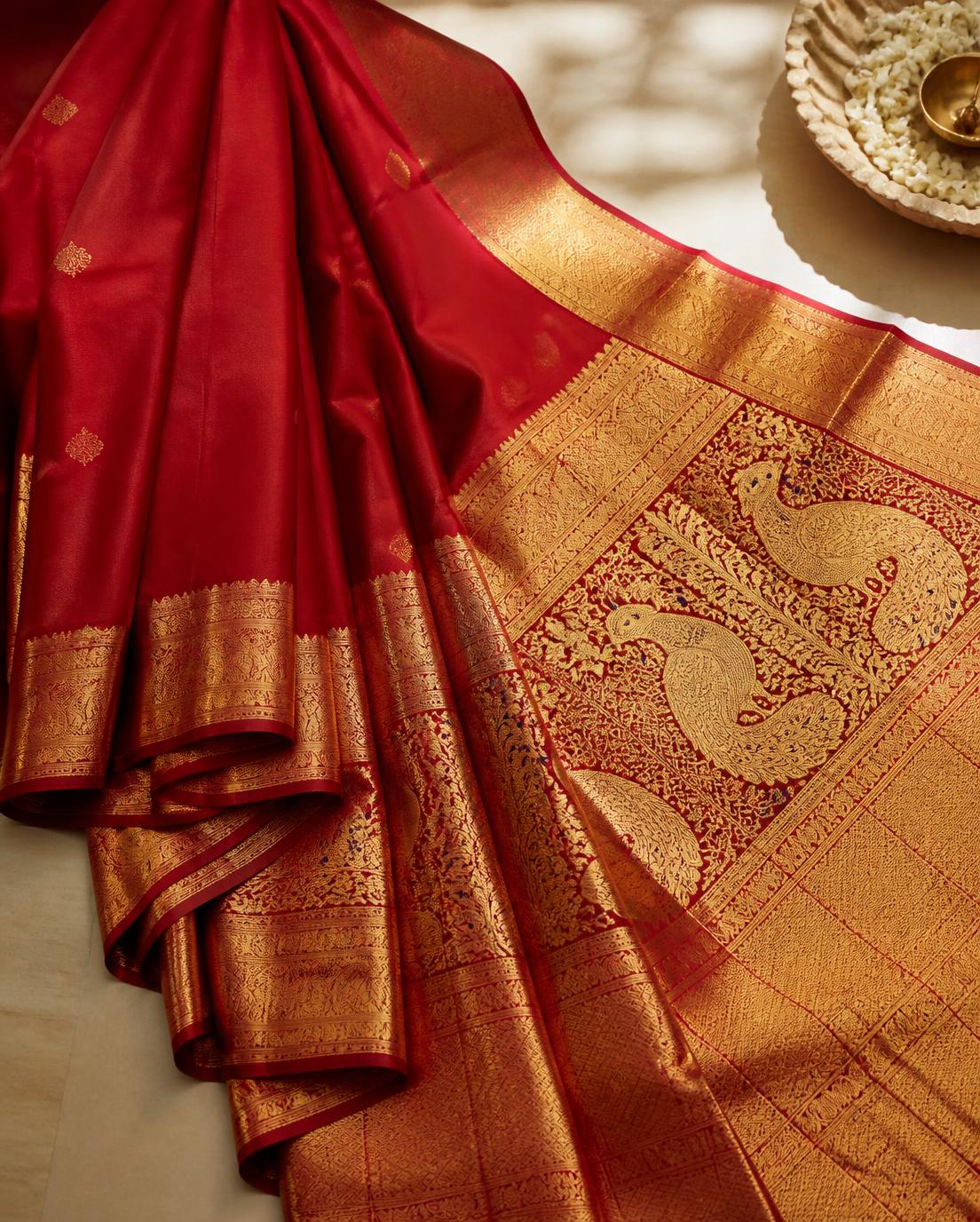
Start with the border, not the colour
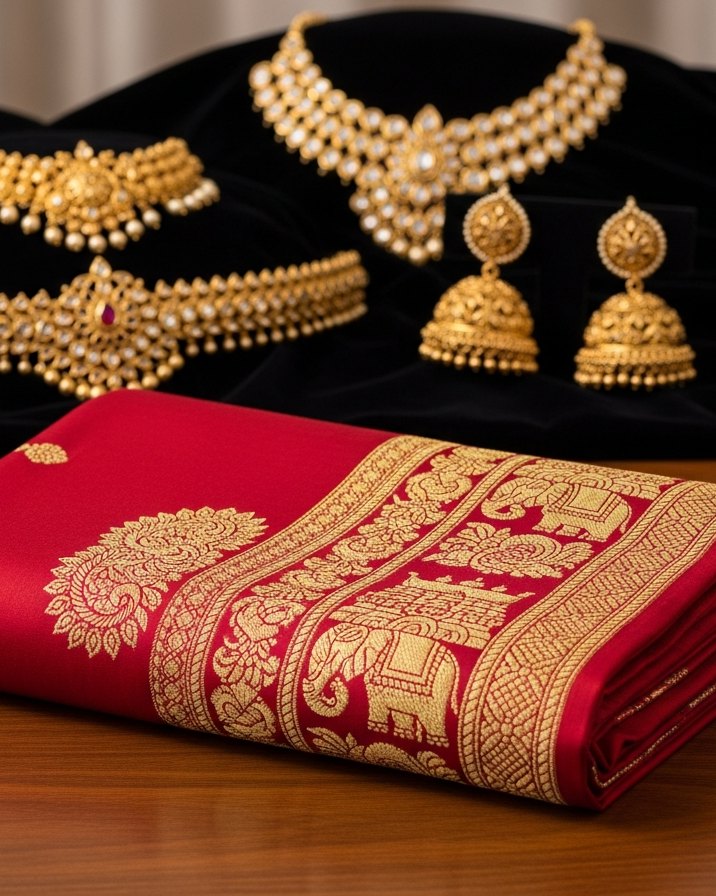
A Kanchipuram saree is defined by its contrast border — woven separately in a heavier zari and joined to the body. Stand a few steps back from the saree in daylight: the border is what reads from across a hall, and it sets how formal the drape looks in photographs.
Wide borders suit the muhurtham and main ceremony. Narrower borders read gentler and are easier to wear again for a family function later in the year.
Then judge the pallu
The pallu carries the story of the saree — temple gopurams, peacocks, mangoes or floral rows in gold zari. Because it falls over the shoulder, it is the part guests see most. Ask for the saree to be opened fully and held up; a pallu can look very different flat on a counter than it does hanging.
Weight is a practical decision
A heavier silk holds pleats beautifully and photographs richly, but it is worn for many hours. Brides who are moving between venues, or who have a long ceremony followed by a reception, often choose a slightly lighter silk for comfort and save the heaviest piece for the main muhurtham.
Colour, in the light it will be worn in
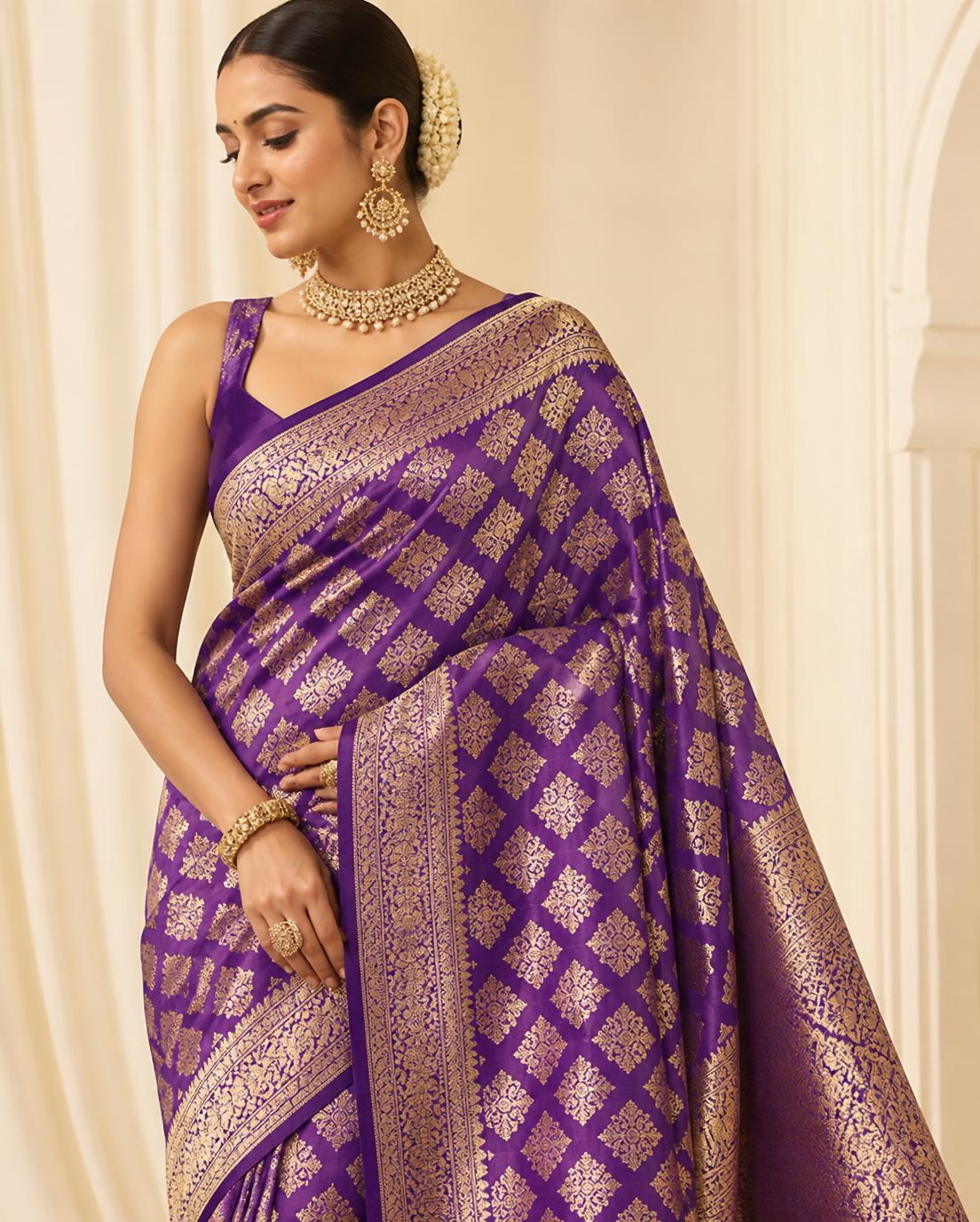
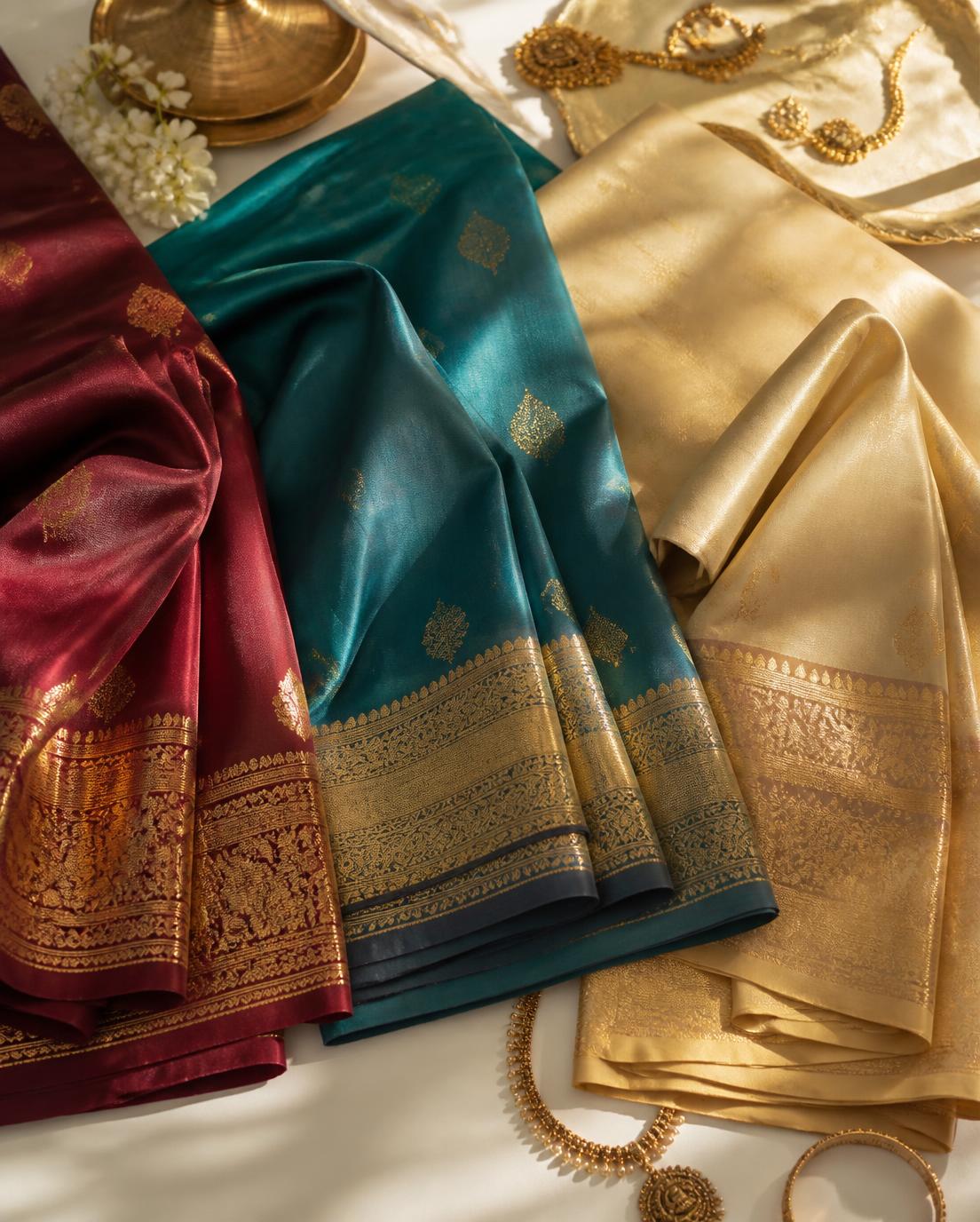
Kumkum red, maroon and mustard remain the classic ceremonial choices, with emerald, peacock blue and deep purple increasingly common. Judge colour in natural light rather than under shop lighting — at our Byadarahalli store we open sarees near the daylight side of the floor for exactly this reason.
See it in person before deciding
Photographs flatten silk. Colour, sheen and fall are all easier to judge with the saree in your hands. Tell us the function dates, the colour family and your budget and we will keep a few Kanchipuram silks aside for your visit to Manjunatha Circle, Byadarahalli.
Related collections